
As one previously guilty of the heavy bent toward fiction, a couple of years ago, I realized that I needed to incorporate more nonfiction reading (especially primary source) into my unit plans in my high school English classroom. I also wanted to enable students to see the connections between people and periods they were learning about in their history classes with works of fiction we were reading in English. So, I rewrote the high school English curriculum to align with history classes, so that if students were learning about World War I in history, they were reading All Quiet On the Western Front in English, along with Wilfred Owen’s poems “Dulce Et Decorum Est” and “Anthem for Doomed Youth” and various works of nonfiction like primary source speeches, newspaper articles, and biographical pieces. Thinking about this culture of literacy discussion this week has made me continue to think about ways to incorporate nonfiction into school curriculums. As a school media specialist, this is something I would not only advocate for, but actively participate in, providing teachers with recommended titles to incorporate into their lessons, whatever the topic or subject may be.
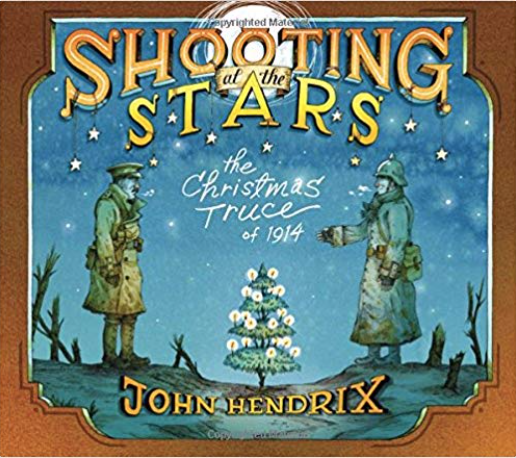
My plan this week is for a school library serving high school students. This unit “Tell Me A Story” would be taught over the course of six weeks in conjunction with the 9th grade English and history teachers’ World War I unit. During the students’ first day of the unit in the library, I will read to them both Shooting at the Stars and Finding Winnie. The former tells the story of the Christmas truce of 1914, an event which, although denied by military officials, is described in several soldiers’ letters home. John Hendrix explains the source of the story, even including a photo of Allied and German soldiers together, in his author’s note. It is a blend of fact and fiction as Hendrix tells the tale from the first-person perspective of a young British soldier writing a letter home to his mother, weaving together background historical information, hand-lettered text, illustrations, and a photograph. Finding Winnie is the true story of the bear who inspired A.A. Milne’s beloved Winnie the Pooh. It’s a story lovingly told by the great-granddaughter of the man who originally found the bear, Harry Colebourne. Lindsay Mattick frames the story as a bedtime story for her son, Cole, and decides, along with illustrator Sophie Blackall, to include a family album in the book, a wonderful addition of photos, diary pages, and a 1914 London Zoo animal record. Both Finding Winnie and Shooting at the Stars inform readers about specific aspects of World War I and the people involved in a way that incorporates carefully researched text with illustrations and primary source material. Students will use these books as inspiration for their own books they’ll be making using Book Creator as a part of this unit. The books must include text, illustrations in whatever medium students choose, audio/visual material, and primary source material. The way they integrate these elements is up to them. They can compose the book as a story the way Mattick or Hendrix did, or students can make a scrapbook.
During the first and second weeks of the unit, I will help students locate print and digital resources in the library so they can read about World War I and decide about what aspect of it they’d like to write their book. I will provide instruction about using the Dewey Decimal system, databases, Google, and Wikipedia effectively.
During the third week of the unit, I will teach students how to use easybib.com to cite the sources they have decided to use. Also, during this week, students will decide upon the design of their book and what information they will be using in it.
During the fourth and fifth weeks of the unit, students will write and create their books on Book Creator. I will teach students learn how to use the platform as well as help them with any issues they may run into as they write their books.
During the sixth and final week of the unit, students will present their books to each other, and I will curate them on our library’s website so that the school community can enjoy reading them.

 The Mermaid's Tale