Posted in Book Reviews

Tales of Jewish Wisdom

Retold by Sheldon Oberman with an introduction and commentary by Peninnah Schram, Solomon and the Ant and Other Jewish Folktales is a compilation of 43 Jewish religious, wisdom, riddle, and trickster tales for readers in 5th grade and above.  Published in 2006 by Boyd Mills Press, these stories, in Schram’s words, “offer us a sense of perspective…lift a cloud from our hearts…restore hope and faith in God…put us on the right path…Teaching, always teaching.”  Oberman’s retellings of these stories originally from the oral tradition are simple and accessible yet full of great wisdom, perfect for sharing aloud or performing. The stories are arranged chronologically and are bookended by helpful context and notes, allowing even a reader or listener unfamiliar with Jewish culture and history to understand the events, characters, and sources of the stories.  Scholars and educators will appreciate the extensive source notes, including tale types and motifs, glossary, and bibliography.  This is a collection to be shared with loved ones, perfect for a cozy fireside read-aloud.

Posted in Book Reviews

A Doubly Clever Folktale

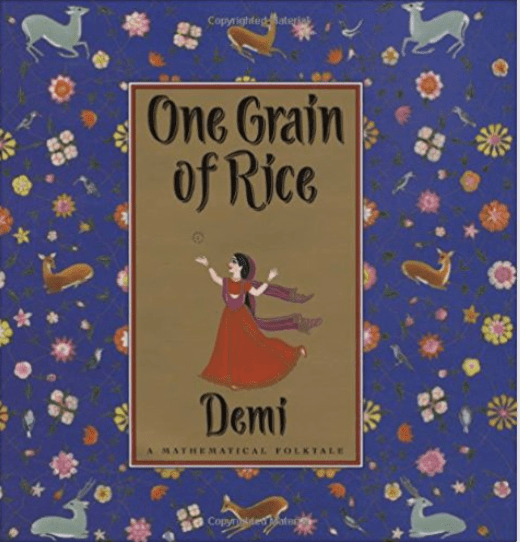
Written and illustrated by Demi, picture book One Grain of Rice: A Mathematical Folktale is the author’s retelling of the Indian folktale “Sissa and the Troublesome Trifles.”  Published in 1997 by Scholastic Press, this book for children ages 4-8 tells the story of an Indian raja who thought he was wise and fair by requiring those in his kingdom to give him most of their rice crop for safekeeping in the event of a famine.  Well, when famine comes, he turns out to be not so fair after all, keeping all of the rice for himself until a clever girl Rani asks him, as a reward for a good deed she performed, for one grain of rice doubled for thirty days. Demi’s vibrantly colored and beautifully detailed illustrations show us just how much rice this amounts to for Rani and the hungry people she shares it with: over one billion grains of rice.  An eye-catching gateway fold reveals that on the thirtieth day, the royal storehouses have been emptied on the backs of 256 elephants. The rich gold accents and engaging story will draw readers in for a read-aloud, but this text also makes an excellent curriculum support, a 30-day table on the book’s last page providing the numbers of grains of rice given to Rani on each day and an instruction to add these numbers together to get the grand total of 1,073,741,823 grains of rice.  Readers of all ages will delight in this engaging tale of how one clever girl used math to feed the hungry and teach a ruler a lesson about compassion and fairness.

Posted in Book Reviews

A Turtle With Feathers?

Written by Tim Tingle and illustrated by Stacey Schuett, picture book When Turtle Grew Feathers: A Folktale from the Chocktaw Nation is the Chocktaw telling of Aesop’s fable “The Tortoise and the Hare.”  Published in 2007 by August House LittleFolk, this book for children ages 4-8 provides an explanation as to why you never see turtles and rabbits racing, for when Rabbit challenges Turtle to a race in this story, Rabbit is surprised to be beaten by Turkey, who had been trying on Turtle’s shell.  Stacey Schuett’s acrylic paintings beautifully illustrate this story of friendship and provide the reader with charming depictions of the animal cast’s expressions, while Tim Tingle’s use of rhymed dialogue and onomatopoeia provide the sounds of the tale’s animals and help us to understand the value of humility.  Not only does this story make an entertaining read-aloud for young readers, but it also has a place as curriculum support, the author’s source note at the end providing another point of reference for the study of Native American mythology. Children and their caregivers will enjoy this Choctaw tale, learning, as Tingle puts it, that “you don’t have to be the biggest, or the fastest, or the best.  But it sure is nice to be friends with those that are!”

Posted in Book Reviews

Bedtime for Biscuit

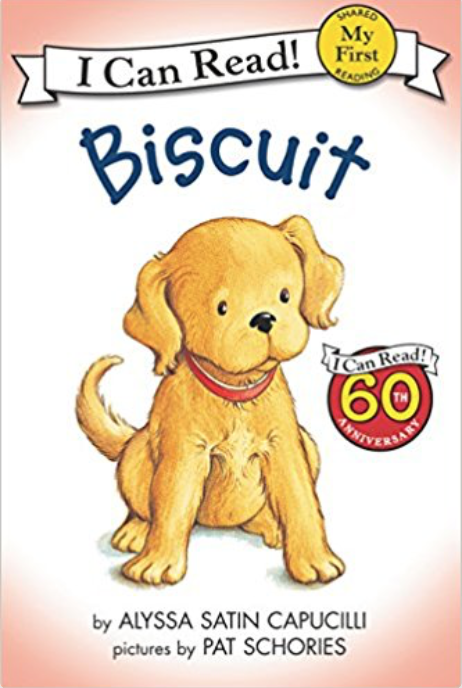
A HarperCollins My First I Can Read! easy reader, Biscuit is the story of a small, yellow dog who is reluctant to be put to bed by his little girl caretaker.  Published in 1996, this book was written by Alyssa Satin Capucilli and illustrated by Pat Schories. Although no recommended age range is listed on this book, it seems best suited for 4-6 year olds who are just developing reading skills.  It has plenty to help emergent readers along: lots of white space, short words and sentences, limited lines on a page, and a 24-point typeface. Repetition is also used effectively in this story: Biscuit’s “woof, woof!” is repeated on just about every spread following the small girl’s command of “Time for bed, Biscuit!”, helping young readers to anticipate what will happen next and learn to recognize these words.  The warm, brightly-colored illustrations are charming, making this a perfect choice for a bedtime read aloud or an independent read. Children and caretakers alike will enjoy reading this sweet story of a dog who just wants one more story, kiss, snuggle… before bedtime.

Posted in Book Reviews

Things That Go: Clackety-Clack

A National Geographic Level 1 easy reader, Trains by Amy Shields is a nonfiction text composed of episodic chapters full of facts about trains.  Published in 2011, this book teaches its readers about such topics as types of trains and how they run, the history of trains in America, and train sounds  The book contains no recommended reader age. Though the text is marked as a Level 1 reader, a ranking that most publishers use to orient these books toward beginning readers, this particular book would be best suited as an independent read for children who are beginning to develop confidence in their reading skills.  The text provides lots of helpful features for early readers: large typeface, mostly short words and lines, Gary the Engineer’s additional information, “Train Talk” boxes defining words such as “loot” and “turntable,” and phonetic spellings for pronunciation of words like “maharaja” and “diesel.” Another fun feature of the text is the onomatopoeia: train sounds such as “whirrrrr,” clackety-clack,” “woooo-woo,” and “ding-ding-ding” are in different colorful fonts throughout the text, making this book a fun read-aloud option.  However, early readers who are looking to read this book independently may find the layout visually overwhelming, as there is not much white space to speak of. The book is packed instead with color: photos both modern and historic, question and answer boxes, cartoon speech bubbles for Gary the Engineer. While these features are fun and interesting, they may not give an early reader’s eyes much chance to rest. This book would make a wonderful tool for classroom instruction or storytime, but is also a good choice for independent readers.  Not only will this text delight train enthusiasts, but it will also interest children who had not previously been particularly interested in locomotives.

Posted in Book Reviews

A Day at the Museum

A HarperCollins I Can Read! Level 1 easy reader, Fancy Nancy at the Museum is a charming story about Jane O’Connor (author) and Robin Preiss Glasser’s (illustrator) beloved character Fancy Nancy.  In this particular adventure, illustrated by Ted Enik, Fancy Nancy is going on a class trip to an art museum but gets sick on the way after eating too large a lunch.  Her teacher Ms. Glass, however, saves the day by loaning Nancy her extra sweater and beret (a French hat, as Fancy Nancy lets her readers know). This book is perfectly suited to its intended age range of ages 4-8 with a 22-point typeface, lots of white space, and short words and lines.  While the fun, colorful illustrations will please fans of the Fancy Nancy series, the best feature of this book is the way it manages to teach its readers new words, such as “overjoyed,” “merci,” and “spectacular,” through parenthetical asides that feel almost conspiratorial between Nancy and her reader, explaining that these words are “fancy words” for “very happy,” “French for ‘thank you,’ ” and “great.”  The text also manages to teach new words about its setting, the museum, defining such words as “gallery,” “landscapes,” “still lifes,” and “portraits” by weaving them into the story without disrupting it. A glossary of “Fancy Nancy’s Fancy Words” with pronunciation help for the French words is provided at the end of the book to recap for the reader.  This book makes a wonderful classroom supplement, especially for an art class, but also is an enjoyable independent read. While this story is clearly aimed at little girls with its fancy title character and her other female friends, including her teacher, boys have something to learn from this text, too, about art and the art of being considerate.

Posted in Book Reviews

A Bully’s Birthday

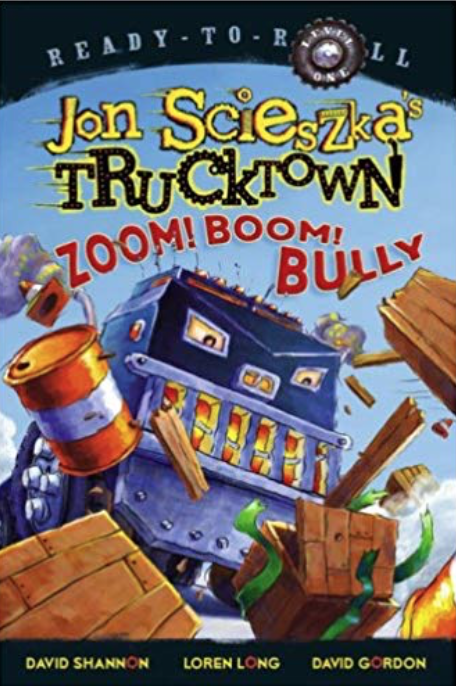
An Aladdin Paperbacks Ready-To-Roll Level 1 easy reader, Jon Scieszka’s Trucktown: Zoom! Boom! Bully is the story of the efforts of five little trucks who do something kind for Big Rig the bully’s birthday by giving him a gift to zoom! boom! knock over.  Published in 2008, this story is written by Jon Scieszka with artwork created by David Shannon, Loren Long, and David Gordon of the Design Garage. Similar to other publishers’ level 1 texts, this book uses short words and sentences, a large typeface, and white space to encourage early readers.  The larger, colorful text for the onomatopoeia Zoom! Boom! adds variety and interest. The text also offers a review of counting backward from four to one as the trucks build Big Rig a layered “cake” of barrels, crates, tires, and cement icing. The repetition of “Zoom! Boom!”, “Big Rig!”, and “He is such a bully,” will also help young readers along.  The artwork is colorful and engaging, effectively conveying Big Rig’s angry Zoom! Boom! and the other trucks’ looks of disappointment at his bullying. Though this book seems to be aimed at little boys, the presence of the pink garbage truck Gabby may seek to draw girls’ attention, as well. This book would make a fun independent read or a read aloud for children who enjoy reading about things that go.  

Posted in Book Reviews

Caring for a Baby Bird

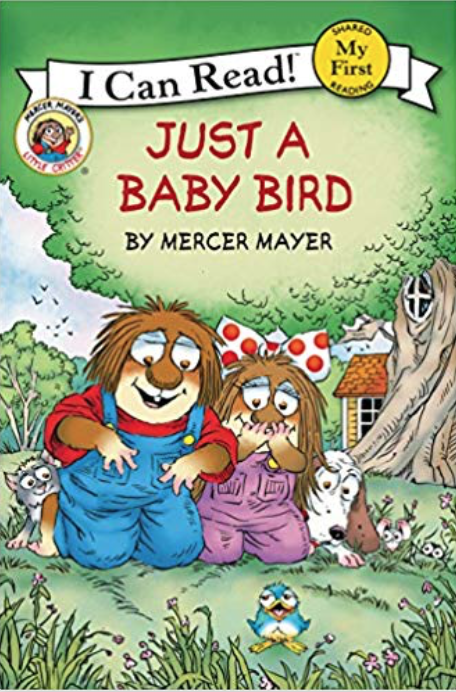
A HarperCollins My First I Can Read! easy reader, Just a Baby Bird by Mercer Mayer is another adventure of the Little Critter and his family.  In this story for children ages 4-8 who are learning to read with help, Little Critter and his sister discover a baby bird whose momma is nowhere to be found.  The family takes care of the bird until it is time for it to fly away, but the bird returns in the spring with a family of its own. Published in 2016, this story is told in an accessible manner for emergent readers with short words and lines, a 24-point typeface, and plenty of white space.  The brightly-colored illustrations help to communicate the story and will be familiar to fans of the Little Critter series, while the modern touches of Mom looking up what to feed the baby bird online and Dad using his smartphone to take a picture of it add modern elements that children will recognize.  Children will enjoy reading this story of compassion and patience on their own or experiencing it as a read aloud.

Posted in Book Reviews

(Sleep?)over

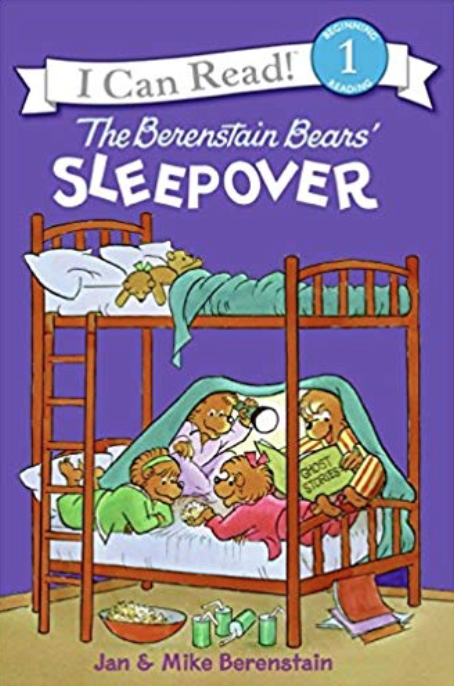
A HarperCollins I Can Read! Level 1 easy reader, The Berenstain Bears’ Sleepover by Mike and Jan Berenstain is another tale of the beloved Berenstain Bear family’s adventures.  In this story for children ages 4-8 who are just beginning to read, Sister and Brother Bear have a sleepover with some friends, but not much sleep actually occurs, resulting in a sleepy Papa and Mama Bear the next morning.  Published in 2009, this story is told in an accessible manner for beginning readers with short words and lines, a 22-point typeface, and plenty of white space. The brightly-colored illustrations help to communicate the story and will be familiar to fans of the Berenstain Bears series.  One thing of note, while the word and line length in this book are not excessive for this beginning reading stage, the sentence length is at times a tad long, with sentences frequently composed of 10 words or more, and there are several lines on each page.  The sentences are simple and declarative, so the complexity should not be prohibitive, but they are longer and more plentiful than sentences found in other I Can Read Level 1 easy readers, a fact for caretakers to be aware of if recommending this book to be read independently by readers truly just beginning to read.  Being too excited to sleep is surely an experience that both children and adults can relate to, making this story a fun read-aloud or an enjoyable book for a child to read on her own.

Posted in Book Reviews

Sharing Is Caring

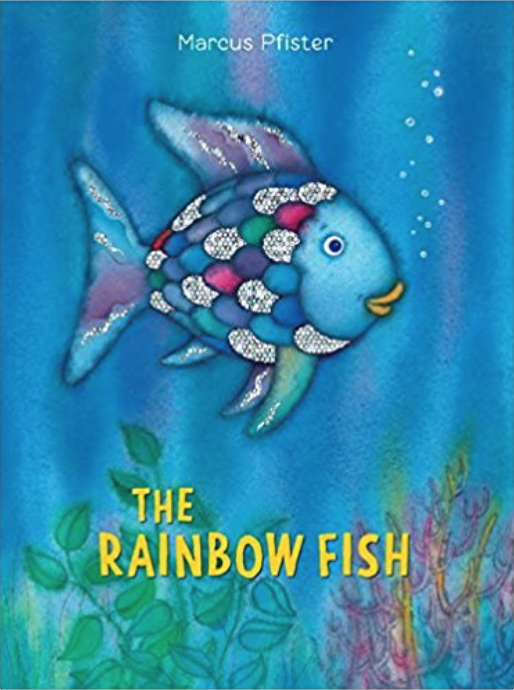
Picture book The Rainbow Fish, written and illustrated by Marcus Pfister, is the story of a rainbow fish who learns about beauty and friendship as he discovers the joy of sharing with others.  Translated by J. Alison James, this book was originally published in 1992 in Switzerland under the title Der Regenbogenfisch, and was published by North-South Books in the U.S. in the same year.  The blues and purples of Pfister’s watercolors are beautiful, but the underwater world they create is sometimes interrupted by all-white, text-only pages.  The namesake fish glimmers across the pages, his holographic scales all over his body on the book’s beginning endpapers in contrast with the single holographic scale left on the final endpapers.  Therein lies the message of the book: the rainbow fish’s vanity keeps him from having any friends until he learns to share his beautiful scales with the other fish who admire his beauty so much. On the one hand, this is a wonderful lesson for children to learn about not being prideful about one’s appearance and learning to give sacrificially, the latter part of this theme reminiscent of Silverstein’s The Giving Tree.  On the other hand, it can leave the reader wondering: should I have to give away my beauty, or any part of myself, to make others happy?  Despite the controversy that sometimes surrounds the message of this book, as with The Giving Tree, its heart seems to be in the right place as Pfister closes the text: “The Rainbow Fish shared his scales left and right.  And the more he gave away, the more delighted he became. When the water around him filled with glimmering scales, he at last felt at home among the other fish…Finally the Rainbow Fish had only one shining scale left.  His most prized possessions had been given away, yet he was very happy.” The beautiful colors and glimmering scales will enchant readers at storytime, and the lesson of generosity, humility, and selflessness is worth sharing and discussing.  

Posted in Book Reviews

An Aussie Adventure

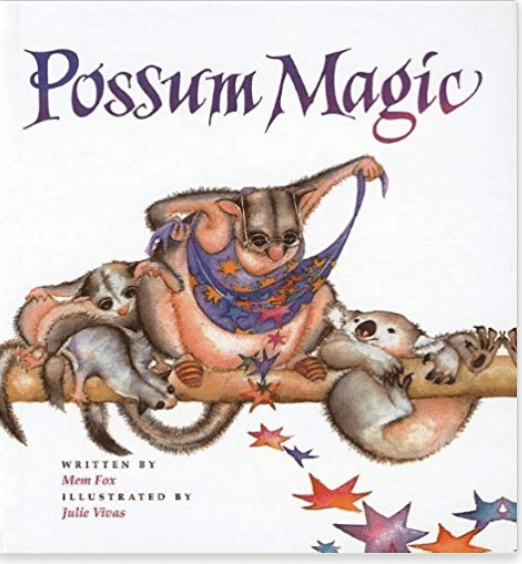
Picture book Possum Magic, written by Mem Fox and illustrated by Julie Vivas, is the charming tale of an invisible possum and her magical grandmother.  Originally published in 1983 by Omnibus Books of Australia, it was published by Voyager Books in 1991 in the U.S. and has come to beloved by readers of many cultures.  Children ages 4-7 and their caregivers will enjoy reading of the adventures of Hush and Grandma Poss as they travel all over Australia eating all kinds of traditional Australian foods (Fox’s map and glossary at the end of the book help with discovering more about these things) in order to make invisible Hush visible again.  Vivas’ illustrations are clever, depicting Hush initially as only an outline but gradually as a full-color possum as her culinary adventure with her grandmother breaks grandma’s spell and makes Hush visible again. This story would make a delightful storytime read as children as introduced to new animals, places, and foods.

Posted in Book Reviews

Adventure Awaits

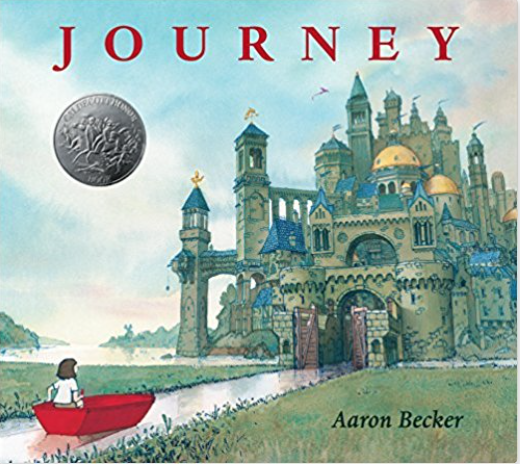
Wordless picture book Journey by Aaron Becker is an exciting tale of adventure for children ages 4-8, but anyone will be entranced by this book’s artwork, pictures which tell the story so well that no words are necessary.  Published in 2013 by Candlewick Press, this 2014 Caldecott Honor Book is reminiscent of Harold and the Purple Crayon but with a story all its own to tell.  The muted pen and ink illustrations at the beginning of the book, brightened only by the color red, depict a lonely girl for whom everyone is too busy.  Picking up a red crayon, she draws a door on her bedroom wall and enters a world of her imagination filled with beautiful watercolors. For each step of her journey, she draws her modes of transportation–a boat, a hot air balloon, a magic flying carpet–but must be set free by a friend that she had freed earlier in the tale: a purple bird.  In an homage to Harold, Becker has subtly placed the color purple throughout the book, even from the first pen and ink spread with a boy on the edge of the page holding a purple crayon.  This story of friendship and adventure will delight readers of all ages.