Wordless picture book Sea of Dreams by Dennis Nolan is a beautiful work of art that draws you in from its cover with a boat on the crest of a wave and doesn’t let you go until the last page’s sandcastle. Published in 2011 by Roaring Brook Press, this book is aimed at children ages 4-7, but anyone interested in art and its capacity to tell stories will delight in its pages. The pictures tell the story of a young girl who builds a sandcastle on the beach and the tiny family who must vacate that sandcastle at night when the tide comes in. The seagull present throughout the story, the return of the little girl to build a taller sandcastle, the light on again at the end of the story…all of these elements leave the reader wondering what happens to the little family, and the lack of text enables the reader to come up with her own interpretation. Both the story’s realistic and imaginative elements, such as mermaids riding seahorses, are rendered in vibrant, richly saturated hues capable of drawing a reader of any age into this imaginative look at what happens after you head home from a day at the beach, the sandcastle that you built still standing.
Author: themermaidtale25535931
American Women from A to Z
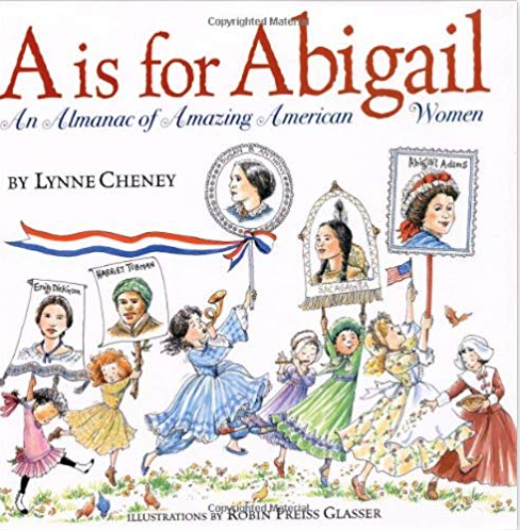
Picture book A is for Abigail: An Almanac of Amazing American Women, written by Lynne Cheney and illustrated by Robin Preiss Glasser, is an alphabet book presenting noteworthy American women to readers ages 6-12. Published in 2003 by Simon & Schuster Books for Young Readers, the book’s rich details will draw readers in, as there is so much in both the text and illustrations to explore. The colors and beautiful designs of the pages are enticing, especially the gatefold for the letter P: a curtain stage that reveals a bevy of American female performers. There is so much information packed onto each page that it is a bit visually overwhelming at times, particularly the B page for “Elizabeth Blackwell and others who wanted to heal” as you have to read around triangular pictures to learn about each woman featured. That fact aside, this text contains a wealth of knowledge that would make a wonderful support for an elementary or middle school history class. Through this text, children will be introduced in an exciting way to many American women whose lives ought to be remembered and modeled.
Z Is for Moose?
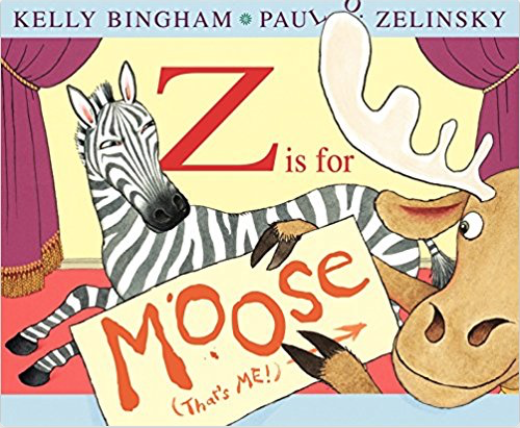
Picture book Z is for Moose, written by Kelly Bingham and illustrated by Paul O. Zelinsky, is a zany story of an impatient moose and his friend zebra, who is organizing an ABC presentation. Published by Greenwillow Books in 2012, this book is one that is aimed at children ages 4-6, but children of all ages (including those just young at heart) will delight in this silly story, maybe even learning some letters of the alphabet along the way. The book’s delightfully funny illustrations begin on the endpapers, where we see a moose holding up a curtain, standing in a line of animals before a zebra with a clipboard saying, “Okay, everyone. Let’s get ready.” We continue to be ushered into this world through the acknowledgement and title pages until we see an apple climbing a set of stairs to be the first feature in zebra’s alphabet show. A, B, C…the book is moving along as expected until “D is for Moose,” a page on which a duck is falling off the back of the stage and zebra is scolding moose for being on the wrong page. The hijinks continue from there until zebra finds a way to work his friend into an unexpected place. While this is not necessarily an alphabet book for caretakers hoping for a clear illustration of each letter and a corresponding word with which to teach their children (the spread for O, P, and Q is trampled upon by a frustrated moose), the humor and unexpected nature of the story make it a fun read for storytime as children squeal with delight, “D is not for Moose!!”
Playing “Slide and Seek”
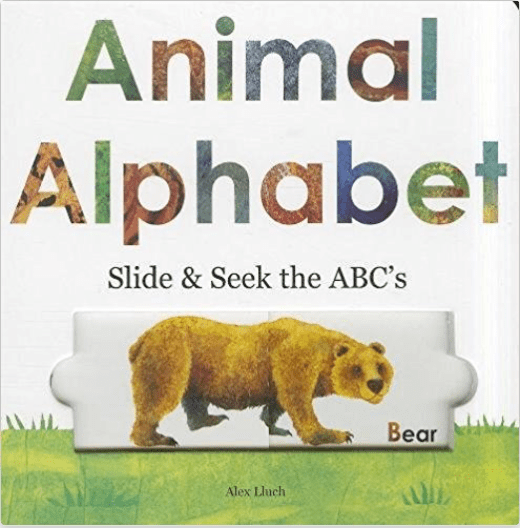
Board book Animal Alphabet: Slide and Seek the ABC’s, written by Alex Lluch and illustrated by David Defenbaugh, is a beautifully illustrated book for children ages two to six. This is the intended audience according to the publisher, but I feel that children even younger than two will be entertained by the book’s slides and instructed by its focus on the alphabet. Published by WS Publishing Group in 2012, the book’s colorful, Eric Carle-esque illustrations of an animal for each letter of the alphabet are pleasing to the eye. While the illustrations are beautiful, it’s the interactive nature of the book, though, that truly draws the reader in. The slides that reveal “A a is for…Alligator” create a sense of anticipation as the child must reveal the whole animal to see what each letter represents. This book makes a fun storytime read for a group, one-on-one, or a child reading to herself. Children will enjoy discovering what lies on the other side of the panel as much as adults will enjoy sharing it with them.
Who Wants to Go On an Adventure?
Digital picture book Monster Jack and Monkey Jessica Go To Sleep, written by Auntie M (elogan1) and illustrated by Ine, is a 24-page tale for preschoolers of adventure, imagination, and teamwork.
In the beginning of this story, one night in the middle of a blizzard, a brother and sister decide to go on an adventure. They spend the middle of the book deciding what kind of adventure to go on. At the end of the story, Daddy interrupts their planning to tell them to go to sleep and adventure tomorrow, to which they reply that the best adventures happen in their dreams.
I like the way the illustrations pair with the text here. They nicely support the message of the text. I do feel, however, that at times the continuity of the style of the art is absent. The illustrations are pleasing to the eye, but the style varies from page to page: sometimes the colors are vibrant and rainbow, while other pages are sepia-toned.
Alliteration is the most dominant storytelling device here. The author uses it to add to the fun of the text: the kids see “Daddy peering into their wonderfully weird world of wistful imagination.” The alliteration and vocabulary of some parts of the text can be instructive for children.
I’m sure that the children for whom this story was written were delighted to read a story about themselves. I think children will like the various silly adventures the children in the story suggest. This is a fun, likable tale with somewhat disjointed art, but the Storbird format through which an author must choose illustrations to fit their text may be part of the reason for this.
How Brave Is Bunny?
Digital picture book Be Brave, Little Bunny, written by Simon’s Mama (Cynthia212) and illustrated by bluedogrose is a 21-page story for children 1-3 years old of a mother’s wish for bravery and adventure for her little bunny.
In the beginning of the story, the mama bunny urges her little bunny to have an adventure, but he protests that he has been frightened by things away from her. In the middle of the story, he takes her advice and has an adventure. By the end of the story, mama bunny has to call him home. He has discovered some courage along the way.
The text matches with the illustrations, but at times I felt that the text was a stretch in order to be descriptive of the picture. For instance, the text for a picture of a bunny riding a horse with two other animal friends is “Wound up galloping down a country lane on a buckskin horse.”
Rhyme, rhythm, and repetition are the most dominant storytelling techniques present here. The mama bunny encourages her little bunny to explore, to which he protests that he did but didn’t like it and wants to come home. The mama bunny replies the same line a few times before the little bunny does what his mama asks and has a little adventure, returning of course to her loving arms after she beckons him home. The repetition of mama bunny’s response and the repeated structure of the mama’s urging and the little one’s response is an expression of the theme: the little bunny can rely on his mama bunny’s response just as he can rely on her love.
The theme of this book is lovely: the unconditional love of a parent is there to support a child who is nervous to be on his own. However, the meter breaks several times throughout the text, and some of the rhymes are a bit of a stretch.
I’m sure the little one for whom this story was written found it a comforting love letter from his mama about being bold but knowing that she is always there for him. The illustrations and message of this book may appeal to young children, but the broken meter may bother the adult reader. It is effective in the sense that the text matches with the pictures, but, just as the mama’s reply to the bunny is repeated several times in the beginning of the book, so is the illustration for it, something that would be different were it a print picture book. An illustrator would have added some nuance to each new picture to add depth to the story.
Needing Some Alone Time?
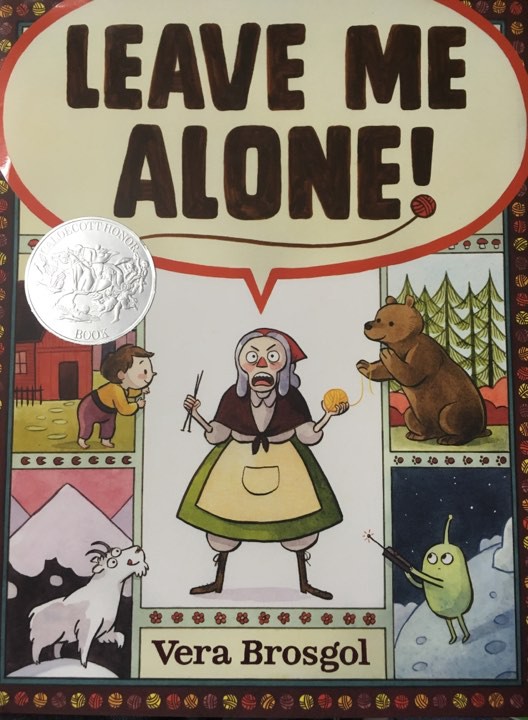
Print picture book Leave Me Alone!, written and illustrated by Vera Brosgol, is a humorous look at balancing one’s love for family with a need for peace and quiet. Told over 18 spreads and 48 pages, this 2017 Caldecott Honor book is written for preschool-2nd graders, but I’m certain that adults will get as much, if not more, enjoyment out of the text as the children to whom they are reading.
At the beginning of this story, we’re introduced to an old woman who lives in a little house with a big family. Winter is coming, so she’s trying to get her knitting done, but she can’t find the time or space to do it. So, she leaves her house to find some peace and quiet. Her epic journey to be left alone to finish her knitting ensues, ultimately leading her into a wormhole in space. At the end of the story, she returns home to her family with her 30 knitted sweaters.
I appreciate this book’s use of negative space and the placement of text in relation to the pictures. I love the spread with the grandchildren curious about her knitting. The illustrations of the children unraveling balls of yarn are wrapped around the text of the children’s questions about the yarn. The next spread has a single sentence, “The old woman was at the end of her rope.” with a picture of the old woman staring a single red line on the ground.
Brosgol uses patterned language, repetition, and predictability to tell her story. For instance, the old woman’s actions to get ready to go on her journey to be alone are the same actions she takes as she prepares to leave the wormhole and head back to her family. Also, each time the old woman finds a new place to knit, the text tells us where she walked to, what she did before sitting down to knit, what interrupts her, and her response of “Leave me alone!” This increases the humor of the text, as her many attempts to find solitude are foiled and she must go to ridiculous lengths to find it.
This book would make a fun storytime read, but I wonder if it appeals more to adults reading this text to children than to the children themselves. Kids may find it humorous seeing how far the grandmother goes to be alone, but they may also identify with the children who have been left alone and be concerned. Adults, however, will find this story all too relatable. What caretaker hasn’t needed a moment of peace and quiet?
Who Hasn’t Wanted a Penguin?
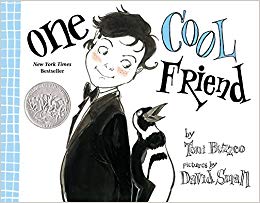
Print picture book One Cool Friend, written by Toni Buzzeo and illustrated by David Small, is a humorous story of the mischievous antics of Elliot, a young boy who befriends and brings home a penguin. Over 14 spreads and 40 pages, this 2013 Caldecott Honor book is aimed at children in kindergarten-3rd grade, but adults will be equally, if not more so, amused by Elliot and his penguin friend.
At the beginning of the story, we are introduced to Elliot, a formal young man whose father has just invited him to go the aquarium, where he puts a penguin in his backpack to bring home. Elliot takes care of the penguin at home, escaping the notice of his father, who is too distracted by reading to notice what his son is doing. At the end of the story, Elliot’s father discovers the penguin his son has brought home, and the reader is surprised to learn something about Elliot’s father.
What I love about this book is the way that the illustrations reveal things to the reader that the text alone does not. For instance, when Elliot asks his father for a penguin at the aquarium, his father hands him a $20 bill. The text just reads Elliot asking for a penguin. The illustrations show Elliot’s father, who’s been reading an issue of National Geographic, handing Elliot the money as he’s looking at a nearby sign advertising today’s special on plush penguins for $19.95. I like how the illustrations reveal the irony of the misunderstanding in this moment that is central to the book’s plot.
The real genius of this story is the way that it builds to the surprise ending. Upon reading it a second time, you discover all the clues that the illustrations give you as to how the story will end. Turtles abound in the illustrations, right down to the box of candy turtles next to Elliot’s father in his study, and the ending makes all of these clues click.
This story is clever. A lot of thought clearly went into the interplay between art and text, with one informing the other to form a witty tale of childhood antics. Pure fun, a delightful storytime tale of mischief, this book appeals to both children and adults. Elliot’s sly actions and his distracted father will have both children and their parents chuckling. Also, who hasn’t wanted to take a penguin home from the aquarium?
Who’s That Bear?
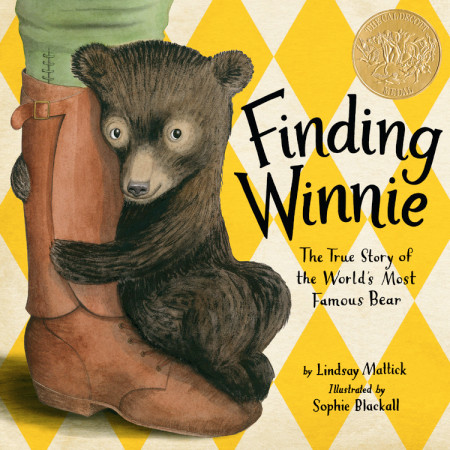
Print picture book Finding Winnie: The True Story of the World’s Most Famous Bear, written by Lindsay Mattick and illustrated by Sophie Blackall, is the true story of the bear behind A. A. Milne’s beloved Winnie the Pooh series. Over 26 spreads and 56 pages, a story unfolds about family, friendship, and the indelible effect of kindness. This 2016 Caldecott Medal book is aimed at children in kindergarten-3rd grade, but it is certainly a story that will enchant their nostalgic parents as well.
The story is bookended by a first-person narrator, the author, telling her son a bedtime story about a bear. She shares the tale of Captain Harry Colebourn, a Canadian veterinarian who buys a bear cub from a trapper at a train stop on his way to his new post at a hospital for horses during WWI. He names her Winnipeg, or Winnie, for short. Then comes Winnie’s journey with Harry and his unit across the Atlantic Ocean to England, where she becomes the mascot of the Second Canadian Infantry Brigade. When the order comes to go to battle, however, at the climax of the book, Harry makes the decision to take Winnie to the London Zoo, her new home. The end of the book picks up a different story: the story of a boy and his father who go to see Winnie at the London Zoo. The boy is Christopher Robin Milne and his father is Alan Alexander Milne, the author who wrote stories all about his son’s friendship with this beloved bear. The end of the book also tells us what happened to Harry and reveals that the narrator telling this story to her son Cole at night is the great-great granddaughter of Captain Harry Colebourn. The last several pages of the book and its endpapers are a family album of pictures, diary entries, and Winnie’s Animal Record Card for the London Zoo.
What really catches the eye about the artwork in this text is the decision to include a family album so that the reader can see the photos and journals that the mother is showing to her son at the end of the story. I love getting to see the real people behind the story. Other than this instance, though, as charming as I find the artwork in this book to be, I don’t find that it adds anything to the text; it merely illustrates it. It does so beautifully, but I wish the illustrations gave you even more details about the story than the text does.
The dominant storytelling technique is that of varying the perspective, alternating between a conversation between the narrator, a mother telling a bedtime story, and her son and the third-person narration of the story of Harry and his bear. I find this to be engaging, as it allows you to discover over the course of the story that the mother telling the story is related to Harry Colebourn, and that the mother is the author of the book. It allows you to hear what the child thinks about the tale, echoing what a child reading the book may be thinking. The illustrations are lovely, and the story is an enchanting one. The thing that really strikes me as brilliant about this text, though, is the author’s use of narrative perspective, how she weaves first-person interjections of the narrator and her son’s exchange over the story at bedtime with the story of Harry and his bear.
This book would make a wonderful storytime read as well as a useful classroom tool for teaching point of view, history, and nonfiction elements. I think this book appeals to children and adults alike. The story’s illustrations and endearing tale of a bear whose name so many recognize makes the text reminiscent of a childhood favorite for some and an introduction to a new friend for others.
Whose Hat Is It?
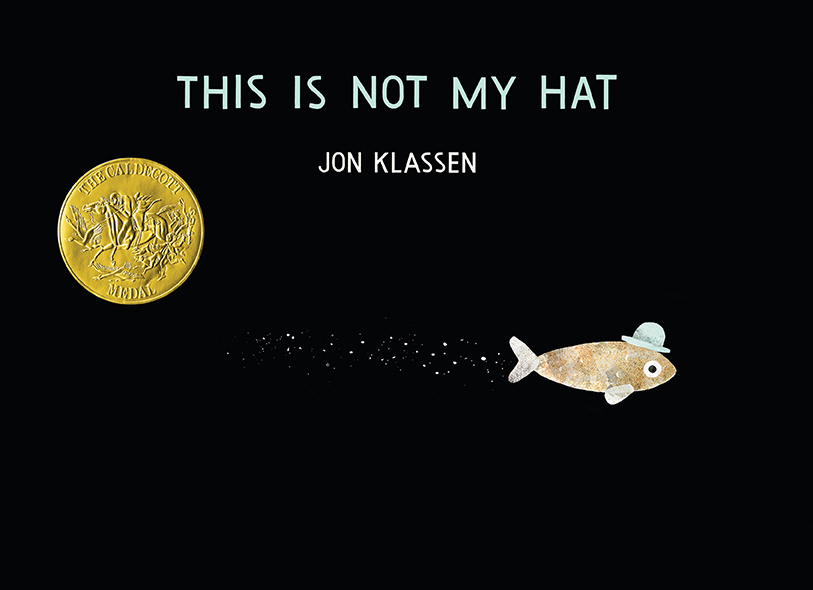
Print picture book This Is Not My Hat, written and illustrated by Jon Klassen, is a story aimed at preschool to 1st grade-aged children, but it’s a delight to all ages. The 2013 Caldecott Medal winner, this is a humorous story about the consequences of one’s actions. Over the course of 16 spreads and 40 pages, Klassen tells his tale with minimal text but illustrations that say so much. At the beginning of the story, a little fish has stolen the hat of a sleeping big fish. He swims toward the tall, dense plants to hide, thinking that he won’t be discovered, but at the climax of the story, the big fish swims into the tall plants behind him. In the end, the little fish is nowhere to be found, and the big fish has his hat back.
The relationship between the text and pictures is one of irony, as the text describes the little fish’s belief that the big fish won’t wake up and discover who took his hat, while the illustrations show just the opposite: the big fish awakening, noticing that his hat is missing, and finding the little fish. Klassen uses dramatic irony, perfectly executed pace, and repetition to tell his story. Using a series of if…then statements, the little fish tells the reader that he doesn’t think the big fish will wake up for a long time, or notice that his hat is gone, or know it was the little fish who took it, or know where he went. The illustrations reveal, however, that this is exactly what is happening. Each spread shows the movement of the fish: first the little fish swimming away, then the big fish following him, then the big fish returning with his hat. The action is happening behind the little fish, so the pace creates suspense as to whether or not the big fish will catch up to the little one. The artistic concept of this book is clever and well-executed, with each spread perfectly timed with the text to create suspense and surprise.
This book would be a fun read for storytime, or a useful text for students to analyze how an author builds suspense and uses dramatic irony. Readers will be drawn in by the high contrast of the black illustrations’ background to the white text background and by the way each spread advances the story, literally moving the fish.
The Journey Begins
Thanks for joining me!
Good company in a journey makes the way seem shorter. — Izaak Walton

Good company in a journey makes the way seem shorter. — Izaak Walton