Posted in Programs

A Pair of Programs: Intergenerational Public Library Fantasy Book Club and Graphic Novel School Library Project

Plan 1: Intergenerational Public Library Fantasy Book Club using Flora & Ulysses

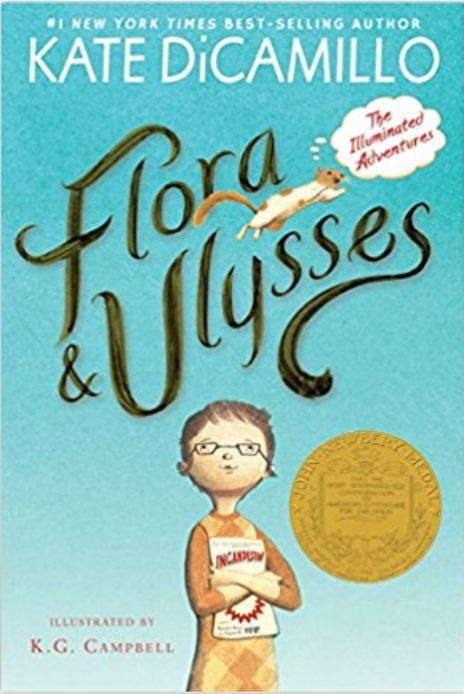
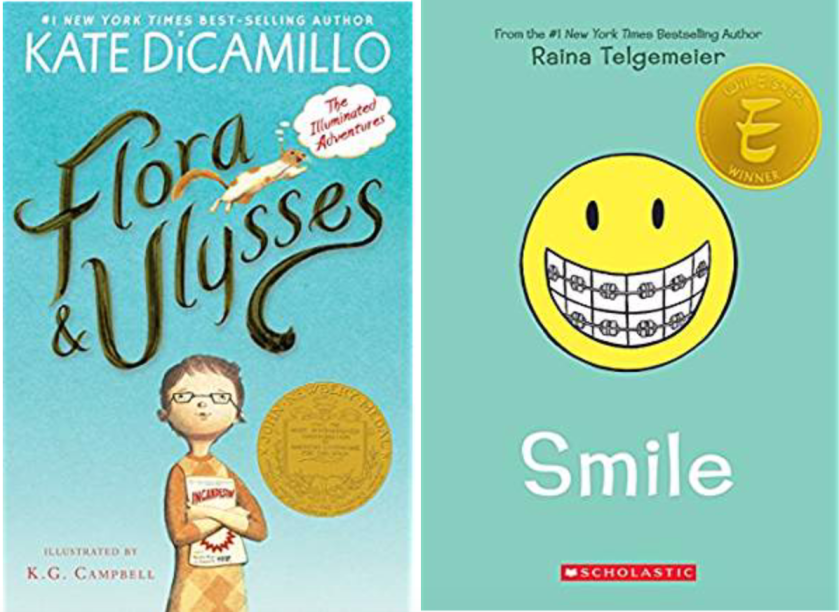
Much of the credit for my love for reading goes to my parents, my mother especially.  Hours were spent on my mother’s lap reading stories. I distinctly remember seeing her reading regularly.  We have regular conversations about what we are reading. Her involvement in my reading life has shaped my life as a reader.  Now, as a children’s librarian, it is one of my greatest joys to watch children sit on their parents’ laps and pore over books they’ve found on the shelves.  In order to keep those conversations about books going, I’d like to form a multigenerational book club centered around Flora & Ulysses.  In this story, Flora’s relationship with her divorced parents is central to the plot and theme of the story, and I’d like to use this as a platform for parents/caregivers and kids to discuss a book together and think about and build their relationships to one another.

This book club, which will involve the creation of the participants’ own fantasy stories, will be for middle-school-age children and a parent or caregiver.  It will meet once a week for five weeks. Each meeting will be an hour long, and snacks will be served. I will publicize it with fliers in the library, a feature on my library bulletin board and on our library website, and posts to our library’s Facebook account.  Registration will be required, and the group will be capped at 15 pairs of students and parents/caregivers (30 people total). Our library has one physical copy of the book and three ebooks. The rest of the titles can be obtained through JerseyCat, our interlibrary loan service.  The budget is $150 for snacks for the meetings. Our library already has all of the art supplies our group will need.

During the first week, I’ll hand out Flora & Ulysses to the book club members and explain the accompanying activities for the month: reading the book and creating our own fantasy stories.  We’ll discuss what the members think of when they think of fantasy stories, whether they enjoy them or not, and what the fantasy genre encompasses.  We’ll also discuss the differences between high and low fantasy. I’ll remind the club members that we’ll come back to this discussion of fantasy as we make our way through the book.  To conclude this first meeting, we’ll begin reading the book out loud together. We’ll look at Campbell’s illustrations and will proceed through the first chapter readers’ theater-style, with a middle schooler reading Flora’s words and thoughts, one of the moms reading Flora’s mother, and me reading the narration.  I’ll ask the club members to read the first 22 chapters for next week.

For the second meeting, I’ll ask the book club members what they think so far of the characters and Flora’s world.  What do they think of Flora’s relationship with her parents? How do they think Flora’s parents really feel about her?  What does Flora think that her parents think of her? What do the book club members think of Campbell’s illustrations and how they’re used in the text?  After discussing, I’ll introduce the activity for the week: beginning our own fantasy stories. Club members can write their stories in text and make a print book; they can make a graphic novel (we’ll pay special attention to how Campbell’s illustrations function in the text) in print or with Toondoo; or they can use Storybird.  I’ll offer a tutorial for using the websites for those who are interested in those options.  I’ll also provide art supplies for those interested in making a print book. Each student will write their fantasy story with their parent/caregiver who is attending the book club with them.  A central theme of this novel is love and belonging. Flora is looking for it in this story, and how she sees her parents affects her sense of home. I’d like the book club members to think about these relationships in their own lives and represent them in their stories.  During this week’s session, each pair will sketch out some preliminary ideas for their stories. Will they use a high or low fantasy format? What will the world of the story be like? What kinds of characters will they include? Club members should work on drafting some ideas for next week and should read chapters 23-45.  

For the third meeting, we’ll discuss how things are progressing in the story.  What is happening with Flora and her parents? What about Flora’s other relationships?  What is everyone thinking about Campbell’s illustrations? What does everyone think about Ulysses?  Is there something special about him? Why is Flora so attached to him? What is everyone noticing about the significance of words to Flora and Ulysses?  Why does she repeat the phrases she does? Also during this week’s meeting, everyone will add to their fantasy stories. I’ll discuss the basic elements of plot and encourage everyone to think about how these points will be represented in their stories.  Club members should continue drafting their stories for next week and should read chapters 46-68 and the Epilogue, finishing the story.

For the fourth meeting, we’ll discuss the ending of the novel.  What does everyone think about how DiCamillo tied everything together at the end?  Do they find it believable? Satisfying? What do Flora and her parents learn? Does everyone have a favorite character?  What did everyone think of Campbell’s illustrations? In addition to discussing the novel, book club members will work on finishing their stories.  I’ll encourage everyone to think about the power and significance of words for Flora and Ulysses. With this in mind, book club members can consider revising their word choices, adding poetry, or using repetition.  

For the fifth and final meeting, book club members will share their stories with each other.  To celebrate the completion of our works, we’ll have a pizza party and giant donuts, with sprinkles a lá Flora and Ulysses, during our meeting.  With the book club members’ permission, I will display the print books in the library on a themed display. I will also curate the digital books on Symbaloo and will share the link on our library’s website and in a library Facebook post for the larger library community to view.

Plan 2: Graphic Novel Memoirs School Library Plan

These past few weeks, I have been really intrigued and delighted by the graphic novel nonfiction scene, so that has been my inspiration for this Culture of Literacy plan.  This plan is for a school library, though I think it could work equally well in a public library. When I was teaching high school English, one of my greatest challenges (but sometimes also my most joyful moments) was finding ways to connect with the myriad of international students in my classes.  By the time the students got to me in senior English, they were supposed to have tested out of ELL classes, but this wasn’t always the case. More often than not, many of the students’ language skills were not advanced enough to keep up in a classroom studying British Literature, so I was always looking for ways to connect these students to the other native-English-speaking students and to engage the ELL students with the content and skills in a way that made the material more accessible.  This plan is for them.

I envision this plan, which I’m calling Sharing My Story, being put into action in a middle school library, the librarian working with the ELL teachers to facilitate those students’ learning and engagement.  The librarian will also be working with the 6th grade Language Arts teachers and their students, as they’ll be participating in this unit as well. During the unit, students will read a graphic novel and will create their own graphic novel memoirs based on their own experiences.  This unit will support the following Common Core standard for writing for 6th grade: “CCSS.ELA-LITERACY.W.6.3–Write narratives to develop real or imagined experiences or events using effective technique, relevant descriptive details, and well-structured event sequences.”  The unit will take place during the month of October to coincide with National Graphic Novel Writing Month and to help the students start the school year off in a successful way.  Ideally, this unit’s ELL participants would be taught to students who are new to the school and at the beginning of their international studies. I will conduct the first meetings with ELL students and regular Language Arts students separately to give each group a chance to get comfortable with me and with the material.  After this, the meetings will be together, if scheduling allows.

During the first meeting of the unit, sixth grade ELL students will meet in the library with me, the school library media specialist, to be introduced to graphic novels, specifically graphic novel memoirs.  I will first ask the students to create a series of three pictures that describe their experience so far with studying in this new school and country. They may use paper and colored pencils/markers/ink or they may collage their images from provided materials.  After the students have composed their images, I will ask the kids to add words to each picture. If the students aren’t comfortable sharing their drawings with the group, they can choose a partner with whom they can share and discuss their work. Upon completion of this activity, I will explain that we will be spending the month reading and working on the students’ own graphic novel memoirs.  I’ll booktalk El Deafo, Smile, Sisters, Real Friends, and To Dance: A Ballerina’s Graphic Novel as the choices for students to read and will assist them with checking one of those titles out.  I’ll ask them to read the first 50 pages or so of their chosen book for our next meeting later in the week.  

During the second meeting, we’ll discuss what students are reading, and I’ll explain the project: we’ll be writing our own graphic novel memoirs, consisting of at least eight spreads (I’ll be making one too so the students can get to know me a little better).  At the end of the unit, we’ll have a party with the students’ families and host families to view our books. Students and their families will be asked to bring one snack to share that represents their home country. Students may choose to depict their experience with coming to the U.S., or they can choose an event or time period from their lives at home.  They may make their own physical book, or they may use Photoshop or ToonDoo to create a digital book.  I will provide art supplies, including materials to create collage art, for those wanting to make a physical book, and I’ll provide instruction for those wishing to make a digital product.  Additionally, I’ll introduce students to reference books in our library which may be of use to them in this unit: Understanding Comics by Scott McCloud, Ed Emberley’s Drawing Book series, and Writing with Pictures by Uri Shulevitz.  By the end of this meeting, we’ll decide what event or time period our graphic novels will be about.  Since I’ll be making one too, I’ll model brainstorming ideas with a web graphic organizer on the board.  I’ll give the students their own graphic organizers to brainstorm their ideas and decide upon their book’s topics.  I’ll ask the students to read the next 50 pages of their chosen graphic novels for our next meeting the following week.  I’ll also send an email home to the students’ families and host families explaining our project and encouraging them to read the same graphic novel that their students chose so that they can converse about it at home.

During our third meeting in the unit’s second week, we’ll discuss what students are reading, specifically how the artwork communicates things to them that the text alone does not.  We’ll also continue working on our books by creating a storyboard. We’ll do this on paper with a graphic organizer so that the kids can visualize their spreads, deciding upon what artwork and text will go on each page.  I’ll ask the students to read the next 50 pages of their chosen graphic novels and to finish their storyboards for our next meeting that week.

During our fourth meeting, we’ll discuss what students are reading, continuing to focus on how the artwork and text work together and on how the stories are developing.  I’ll conference with each of them about their storyboards as they begin to work on building their books. I’ll ask the students to finish their reading of their chosen graphic novels and to complete at least two spreads of their book for our next meeting the following week.

During our fifth meeting in the unit’s third week, we’ll discuss the conclusions of the students’ readings.  What did they think about the way the authors chose to tell their stories? We’ll spend the rest of our time on our books.  I’ll show the kids what I have so far and will meet with each of them briefly to see how their books are developing. I’ll ask them to complete another two spreads of their book for our next meeting that week.

During our sixth meeting, we’ll continue to work on our books.  Their next two spreads will be due the following week.

During our seventh meeting in the unit’s fourth week, we’ll continue to work on our books.  I’ll share some of my progress and will offer feedback on their work. Their last two spreads will be due at our next meeting that week.

During our eighth meeting, we will put the finishing touches on our books.  I’ll remind that for our meeting next week, their host families will be joining us in the library to view our graphic memoirs.  

During our ninth meeting and the final one of the unit, we will have a party in the library to celebrate and view our projects.  We will have the food that I and the students and their families brought from their home traditions and countries. If students feel comfortable with it, I will share their books digitally on the library’s web page or display their books in the library.  I’ll invite the school community to view and comment on them. However, I understand that some of them may feel that their books are too personal, so I will only display the books from students who give me permission. Hopefully, this will be an opportunity for students and their host families to bond and for the hosts to gain a better understanding of the student who is spending the year with them.  I also hope that this will be an opportunity for students to bond with each other and to understand those with different experiences and cultures than their own. If students allow me to share, the opportunity for understanding and building relationships can be expanded to the school community, as well.
Posted in Book Reviews

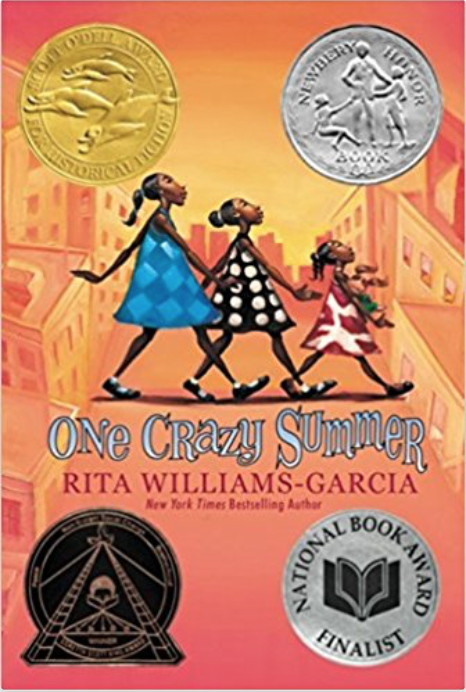
Sisters, Black Panthers, and One Crazy Summer

Newbery Honor novel One Crazy Summer by Rita Williams-Garcia tells a story set in 1968 of three sisters who travel from Brooklyn, New York, to Oakland, California, to visit their mother.  Published in 2010 by HarperCollins, this book also is a National Book Award Finalist, a winner of the Scott O’Dell Award for Historical Fiction, and a Coretta Scott King Award winner.  This emotional tale for readers in grades 3-7 is narrated by eleven-year-old Delphine, who, at the beginning of the novel, is on an airplane with her younger sisters Vonetta and Fern, making their way across the country to see Cecile, the girls’ mother who abandoned them years before.  Their California dreaming of “riding wild waves on surfboards, picking oranges and apples off fruit trees, filling our autograph books with signatures from movie stars we’d see in soda shops” does not turn out to be the reality of their summer, as Cecile sends them to a Black Panther day camp instead.  Whether read as part of a school curriculum or simply for enjoyment, readers are sure to be drawn into this equal parts heartbreaking and beautiful story of culture, family, and identity.

Posted in Book Reviews

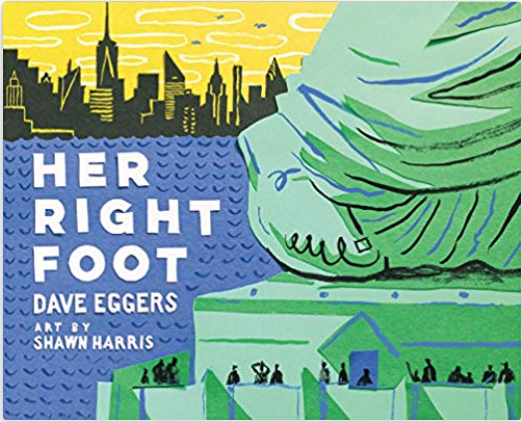
Lady Liberty Is On The Move!

Nonfiction picture book Her Right Foot, written by Dave Eggers and illustrated by Shawn Harris, is a thought-provoking look at a symbol we all recognize: the Statue of Liberty.  Eggers, however, does not focus on her face or her torch as he points out that most representations or discussions of her do, but at her right foot, which is mid-stride.  Published in 2017 by Chronicle Books, this picture book’s intended audience is children in kindergarten-3rd grade, but the information it presents–who built the statue and where, how it was constructed, what various parts of her represent–may be new to the adult readers of this story as well.  Eggers’ notice of the fact that “She is on the move!” spurred him to write this book, asking his readers in a dry, conversational tone to think about the fact that this iconic American symbol of welcome is moving. His theory, vibrantly illustrated by Harris, is that she, herself an immigrant, must continue to meet immigrants “in the sea” rather than standing still and waiting for change.  Photos of the statue, as well as a photo of “The New Colossus” sonnet at her base, accompany Eggers’ source notes and suggestions for further reading, making this book one to read to our children, to our friends, to our neighbors to spur thought and conversations around this timely topic.

Posted in Book Reviews

Shane Burcaw Is Not So Different

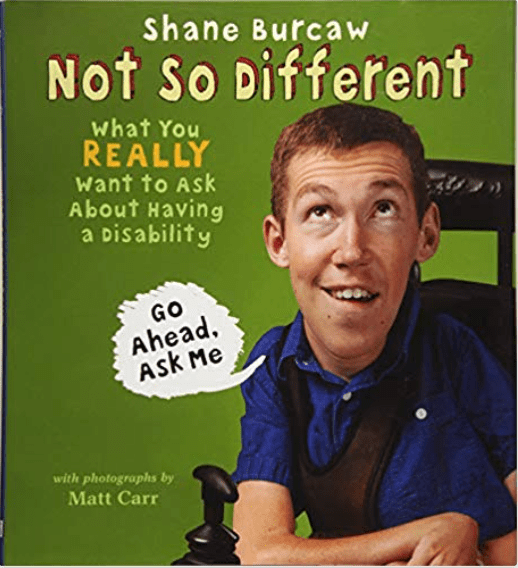
Nonfiction picture book Not So Different: What You Really Want to Ask About Having a Disability by Shane Burcaw is one that answers questions that the author has encountered about his disability, a disease called spinal muscular atrophy (SMA).  Published in 2017 by Roaring Brook Press, the book is formatted with Matt Carr’s colorful photographs of Burcaw and his family interspersed with graphics and speech bubbles, making it accessible not only to its intended audience of students in 1st-4th grades, but to readers of all ages.  Questions ranging from “What’s wrong with you?” to “Do people ever make fun of you?” are answered honestly and humorously by Burcaw, addressing topics just about everyone has wondered about those with disabilities and helping readers to see that Burcaw is not so different than them. He informs us that he likes foods like mashed potatoes, mac and cheese, and pizza, sometimes “all at once.”  He drives his chair with “a joystick, sort of like a video-game controller.” His author’s note reminds us that “we all have different strengths, weaknesses, and abilities, and that’s not just okay, it’s beautiful.” This book is a wonderful resource to share with children as we seek to educate them about not only those with disabilities, but also about what makes each of us unique and about the ways in which we are all similar.  

Posted in Programs

Tell Me A Story: A World War I Nonfiction Unit Plan

As one previously guilty of the heavy bent toward fiction, a couple of years ago, I realized that I needed to incorporate more nonfiction reading (especially primary source) into my unit plans in my high school English classroom.  I also wanted to enable students to see the connections between people and periods they were learning about in their history classes with works of fiction we were reading in English. So, I rewrote the high school English curriculum to align with history classes, so that if students were learning about World War I in history, they were reading All Quiet On the Western Front in English, along with Wilfred Owen’s poems “Dulce Et Decorum Est” and “Anthem for Doomed Youth” and various works of nonfiction like primary source speeches, newspaper articles, and biographical pieces.  Thinking about this culture of literacy discussion this week has made me continue to think about ways to incorporate nonfiction into school curriculums. As a school media specialist, this is something I would not only advocate for, but actively participate in, providing teachers with recommended titles to incorporate into their lessons, whatever the topic or subject may be.  

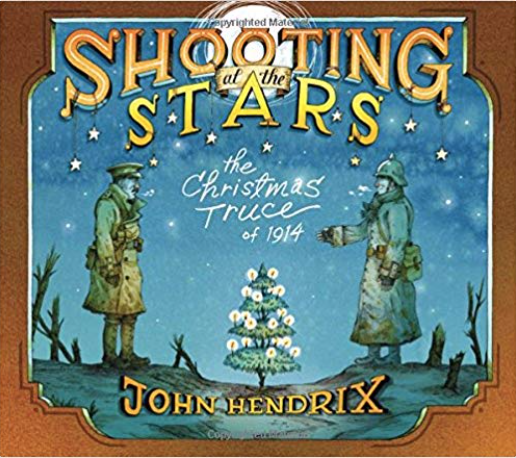
My plan this week is for a school library serving high school students.  This unit “Tell Me A Story” would be taught over the course of six weeks in conjunction with the 9th grade English and history teachers’ World War I unit.  During the students’ first day of the unit in the library, I will read to them both Shooting at the Stars and Finding Winnie.  The former tells the story of the Christmas truce of 1914, an event which, although denied by military officials, is described in several soldiers’ letters home.  John Hendrix explains the source of the story, even including a photo of Allied and German soldiers together, in his author’s note. It is a blend of fact and fiction as Hendrix tells the tale from the first-person perspective of a young British soldier writing a letter home to his mother, weaving together background historical information, hand-lettered text, illustrations, and a photograph.  Finding Winnie is the true story of the bear who inspired A.A. Milne’s beloved Winnie the Pooh.  It’s a story lovingly told by the great-granddaughter of the man who originally found the bear, Harry Colebourne.  Lindsay Mattick frames the story as a bedtime story for her son, Cole, and decides, along with illustrator Sophie Blackall, to include a family album in the book, a wonderful addition of photos, diary pages, and a 1914 London Zoo animal record.  Both Finding Winnie and Shooting at the Stars inform readers about specific aspects of World War I and the people involved in a way that incorporates carefully researched text with illustrations and primary source material.  Students will use these books as inspiration for their own books they’ll be making using Book Creator as a part of this unit.  The books must include text, illustrations in whatever medium students choose, audio/visual material, and primary source material.  The way they integrate these elements is up to them. They can compose the book as a story the way Mattick or Hendrix did, or students can make a scrapbook.

During the first and second weeks of the unit, I will help students locate print and digital resources in the library so they can read about World War I and decide about what aspect of it they’d like to write their book.  I will provide instruction about using the Dewey Decimal system, databases, Google, and Wikipedia effectively.

During the third week of the unit, I will teach students how to use easybib.com to cite the sources they have decided to use.  Also, during this week, students will decide upon the design of their book and what information they will be using in it.

During the fourth and fifth weeks of the unit, students will write and create their books on Book Creator.  I will teach students learn how to use the platform as well as help them with any issues they may run into as they write their books.  

During the sixth and final week of the unit, students will present their books to each other, and I will curate them on our library’s website so that the school community can enjoy reading them.

Posted in Programs

Josh Baxter Levels Up: An Interdisciplinary Plan for School Libraries

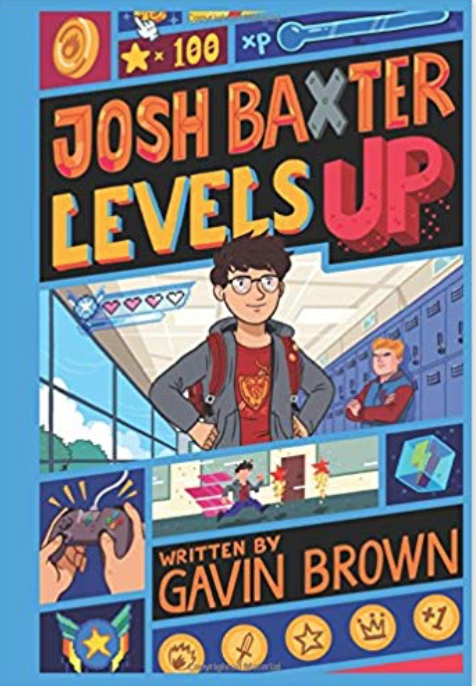
My plan is designed for a school library, but some of the activities, like the coding lessons and reading of the book, could work well in a public library setting as well.  My idea is for an eight-week interdisciplinary unit plan centered around Josh Baxter Levels Up for fifth graders involving the school library media specialist and the English language arts, physical education, art, and computer science teachers.  There are also opportunities for math and science teachers to get involved as well depending on the school’s curriculum.

Weeks 1-4: In September, the English language arts teachers will teach a unit using Josh Baxter Levels Up, providing opportunities for the students to learn new vocabulary as well as lessons about plot, characterization, conflict, and theme.  In addition, any new students will be paired with a buddy to help them navigate their new school environment. All other students will also be paired up; each pair of students will write a first-person narrative featuring a protagonist who must overcome something difficult or adjust to a new environment.

Weeks 1-5: During that month, the media specialist will organize an Hour of Code event through code.org, giving students the basics in coding. Josh thinks of his world in terms of the video games he plays, so students will get an opportunity as a part of this unit to learn about coding and to bring the stories they wrote to life.  During the fifth week of this unit, the computer teachers will work with the library media specialist to organize class periods during which students will use Scratch, an MIT project available for free use, to create their stories digitally.  I like this format because, much like Google Classroom, educators can create free accounts from which they can create student accounts and manage class projects.  ScratchEd is developed and supported by the Harvard Graduate School of Education, providing educators with an online community of teachers sharing ideas and resources, as well as in-person meeting opportunities.  Additionally, there are tutorials, educator guides, and a Creative Computing Guide available as resources.  I also like Hopscotch as a story animation resource, if for nothing else than for teachers to view the one-hour lesson plan complete with Common Core ELA Standards that is provided.   

Weeks 6-7: After learning to animate their stories, students will continue to work on this project during a two-week period by creating story-based games in computer class with help from the school library media specialist.  They will use Stencyl to do this, an online resource whose “drag-and-drop gameplay designer pays homage to the successful MIT Scratch project. We extend Scratch’s simple block-snapping interface with new functionality and hundreds of ready-to-use blocks.”  Educators can use the free Educator’s Kit to teach this unit, a resource which provides two weeks of lesson plans and activities to support students’ creation of games based on their stories.  

Week 8: Finally, after students have created their stories and games, the media specialist will curate the games on the library’s website so that fifth grade students can play them during the eighth week of the unit.  Kids will vote for their favorite, and the winner will be turned into a real-life game that students will create in the gym with the help of physical education and art teachers.

Weeks 9-10: During the ninth and tenth weeks of the unit, in English class for three class periods, students will work on turning the computer game into a real-life playable experience.  Because there will be multiple classes working on this, each class will post their planning progress on a large sheet of paper at the front of the classroom, so that the next class can continue adding to the plan.  Phys. ed teachers will give students a list of physical movements to incorporate into the real-life gameplay, such as sit-ups, pull-ups, jumping jacks. During three class periods, art teachers will help kids design and create posters, cutouts, or other artwork to hang around the gym to create the world of the game that kids will play in gym class.  The following week, phys. ed teachers will give students one period to set up their game in the gym so that classes can play it during gym class that week, with a trophy awarded to the team with the highest score.

By the end of this unit, students will not only have strengthened their language arts skills, but will have learned the basics of coding, used artistic skills, gotten some exercise, and built relationships with each other that encourage collaboration and teamwork. 

Posted in Programs

Flora & Ulysses: A Library Book Club Plan

Much of the credit for my love for reading goes to my parents, my mother especially.  Hours were spent on my mother’s lap reading stories. I distinctly remember seeing her reading regularly.  We have regular conversations about what we are reading. Her involvement in my reading life has shaped my life as a reader.  Now, as a children’s librarian, it is one of my greatest joys to watch children sit on their parents’ laps and pore over books they’ve found on the shelves.  In order to keep those conversations about books going, I’d like to form a multigenerational book club centered around Flora & Ulysses.  In this story, Flora’s relationship with her divorced parents is central to the plot and theme of the story, and I’d like to use this as a platform for parents/caregivers and kids to discuss a book together and think about and build their relationships to one another.

This book club, which will involve the creation of the participants’ own fantasy stories, will be for middle-school-age children and a parent or caregiver.  It will meet once a week for five weeks.

During the first week, I’ll hand out Flora & Ulysses to the book club members and explain the accompanying activities for the month.  We’ll be reading the book over the course of the month, as well as creating our own fantasy stories.  We’ll discuss what the members think of when they think of fantasy stories, whether they enjoy them or not, and what the fantasy genre encompasses.  We’ll also discuss the differences between high and low fantasy. I’ll remind the club members that we’ll come back to this discussion of fantasy as we make our way through the book.  To conclude this first meeting, we’ll begin reading the book out loud together. We’ll look at Campbell’s illustrations together and will proceed through the first chapter readers’ theater-style, with a middle schooler reading Flora’s words and thoughts, one of the moms reading Flora’s mother, and me reading the narration.  I’ll ask the club members to read the first 22 chapters for next week.

For the second meeting, I’ll ask the book club members what they think so far of the characters and Flora’s world.  What do they think of Flora’s relationship with her parents? How do they think Flora’s parents really feel about her?  What does Flora think that her parents think of her? What do the book club members think of Campbell’s illustrations and how they’re used in the text?  After discussing, I’ll introduce the activity for the week: beginning our own fantasy stories. Club members can write their stories in text and make a print book; they can make a graphic novel (we’ll pay special attention to how Campbell’s illustrations function in the text); or they can use Storybird.  I’ll offer a tutorial for using the site for those who are interested in that option. Each book club member will write his/her own fantasy story and will incorporate a character representing the person taking part in the book club with him/her. Kids will write a story incorporating a father or mother character, and parents/caregivers will use a child character in their stories.  A central theme of this novel is love and belonging. Flora is looking for it in this story, and how she sees her parents affects her sense of home. I’d like the book club members to think about these relationships in their own lives and represent them in their stories. Everyone should work on their stories individually, not sharing them until our last meeting. I want parents and children to be surprised by how each is depicted in the others’ stories.  During this week’s session, each person will sketch out some preliminary ideas for their stories. Will they use a high or low fantasy format? What will the world of the story be like? What kinds of characters will they include? Club members should work on drafting some ideas for next week and should read chapters 23-45.

For the third meeting, we’ll discuss how things are progressing in the story.  What is happening with Flora and her parents? What about Flora’s other relationships?  What is everyone thinking about Campbell’s illustrations? What does everyone think about Ulysses?  Is there something special about him? Why is Flora so attached to him? What is everyone noticing about the significance of words to Flora and Ulysses?  Why does she repeat the phrases she does? Also during this week’s meeting, everyone will add to their fantasy stories. I’ll discuss the basic elements of plot and encourage everyone to think about how these points will be represented in their stories.  Club members should continue drafting their stories for next week and should read chapters 46-68 and the Epilogue, finishing the story.

For the fourth meeting, we’ll discuss the ending of the novel.  What does everyone think about how DiCamillo tied everything together at the end?  Do they find it believable? Satisfying? What do Flora and her parents learn? Does everyone have a favorite character?  What did everyone think of Campbell’s illustrations? In addition to discussing the novel, book club members will work on finishing their stories.  I’ll encourage everyone to think about the power and significance of words for Flora and Ulysses. With this in mind, book club members can consider revising their word choices, adding poetry, or using repetition.  

For the fifth and final meeting, book club members will share their stories.  Before asking if anyone would like to share their story with the group, I’ll ask for the kids to share their stories first with their parent/caregiver and vice versa.  I’d like the kids and parents to have the opportunity to share their creations and character representations with each other before sharing with the group. Oh, and we’ll have giant donuts, with sprinkles, to eat during our meeting.  

Posted in Book Reviews

Poems for Bedtime

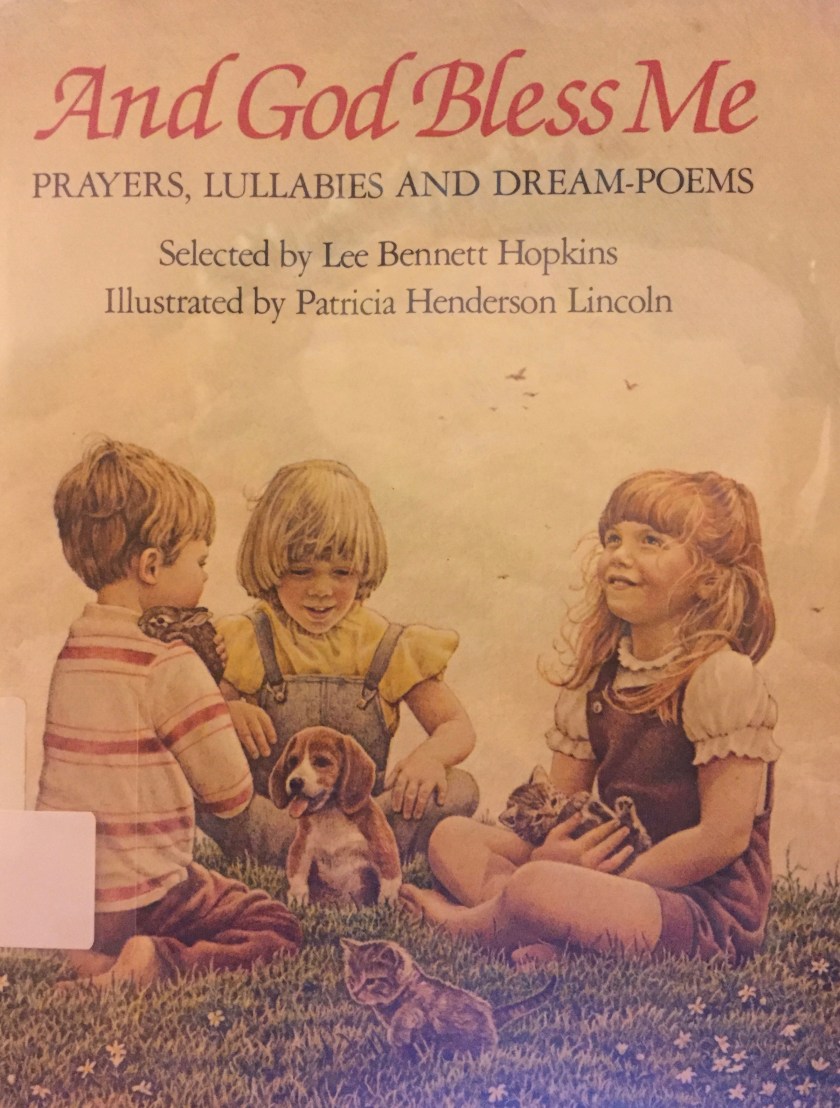
Compiled by Lee Bennett Hopkins and illustrated by Patricia Henderson Lincoln, And God Bless Me: Prayers, Lullabies and Dream-Poems is a charming selection of poetry for children ages 3-8.  Published in 1982 by Alfred A. Knopf, this anthology contains works from such poets as Carl Sandburg, Madeline L’Engle, Langston Hughes, Sara Teasdale, and Lee Bennett Hopkins.  Lincoln’s muted color and black-and-white sketches complement the lovely simplicity of the poetry about such topics as bathtime, nighttime, bedtime, lullabies, and prayers. Children and their caregivers will enjoy winding down with these soothing poems at the end of the day.

Posted in Book Reviews

Words and Music

With verses by America’s first Children’s Poet Laureate Jack Prelutsky and illustrations by Mary GrandPré, Camille Saint-Saëns’ 1886 musical composition The Carnival of the Animals is given new life as a way of introducing children to classical music.  Published in 2010 by Alfred A. Knopf, this book contains a CD with a fully orchestrated version of Saint-Saëns’ music as well as dramatic readings of the verses by Prelutsky.  Though this book is recommended for children ages 5-8, readers of all ages will enjoy listening to the music and reading Prelutsky’s verses, each one written to match the orchestral representations of a lion, elephants, birds, and other creatures in the menagerie.  GrandPré’s richly-colored mixed-media illustrations add additional beauty to the text, making it both visually and aurally pleasing. A note to parents and teachers from the head of the music department of New York’s Rudolf Steiner School is also included, helping caretakers to provide “activities worthy of imagination” for children of different ages and cognitive levels.  Prelutsky’s humorous verses will have children smiling, and Saint-Saëns’ music will have them on their feet dancing as they explore both music and poetry in this exciting text.

Posted in Book Reviews

Tales of Jewish Wisdom

Retold by Sheldon Oberman with an introduction and commentary by Peninnah Schram, Solomon and the Ant and Other Jewish Folktales is a compilation of 43 Jewish religious, wisdom, riddle, and trickster tales for readers in 5th grade and above.  Published in 2006 by Boyd Mills Press, these stories, in Schram’s words, “offer us a sense of perspective…lift a cloud from our hearts…restore hope and faith in God…put us on the right path…Teaching, always teaching.”  Oberman’s retellings of these stories originally from the oral tradition are simple and accessible yet full of great wisdom, perfect for sharing aloud or performing. The stories are arranged chronologically and are bookended by helpful context and notes, allowing even a reader or listener unfamiliar with Jewish culture and history to understand the events, characters, and sources of the stories.  Scholars and educators will appreciate the extensive source notes, including tale types and motifs, glossary, and bibliography.  This is a collection to be shared with loved ones, perfect for a cozy fireside read-aloud.

Posted in Book Reviews

A Doubly Clever Folktale

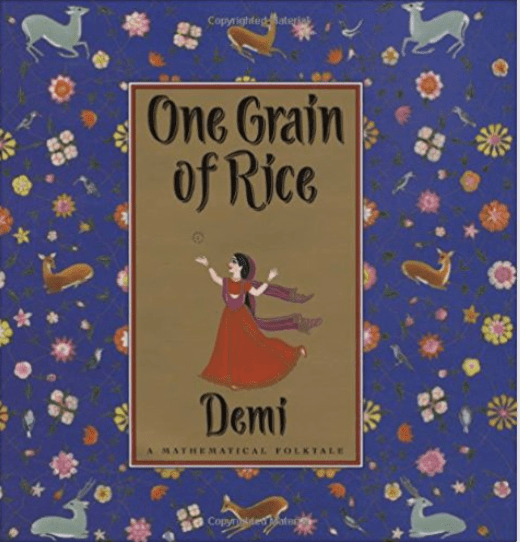
Written and illustrated by Demi, picture book One Grain of Rice: A Mathematical Folktale is the author’s retelling of the Indian folktale “Sissa and the Troublesome Trifles.”  Published in 1997 by Scholastic Press, this book for children ages 4-8 tells the story of an Indian raja who thought he was wise and fair by requiring those in his kingdom to give him most of their rice crop for safekeeping in the event of a famine.  Well, when famine comes, he turns out to be not so fair after all, keeping all of the rice for himself until a clever girl Rani asks him, as a reward for a good deed she performed, for one grain of rice doubled for thirty days. Demi’s vibrantly colored and beautifully detailed illustrations show us just how much rice this amounts to for Rani and the hungry people she shares it with: over one billion grains of rice.  An eye-catching gateway fold reveals that on the thirtieth day, the royal storehouses have been emptied on the backs of 256 elephants. The rich gold accents and engaging story will draw readers in for a read-aloud, but this text also makes an excellent curriculum support, a 30-day table on the book’s last page providing the numbers of grains of rice given to Rani on each day and an instruction to add these numbers together to get the grand total of 1,073,741,823 grains of rice.  Readers of all ages will delight in this engaging tale of how one clever girl used math to feed the hungry and teach a ruler a lesson about compassion and fairness.

Posted in Book Reviews

A Turtle With Feathers?

Written by Tim Tingle and illustrated by Stacey Schuett, picture book When Turtle Grew Feathers: A Folktale from the Chocktaw Nation is the Chocktaw telling of Aesop’s fable “The Tortoise and the Hare.”  Published in 2007 by August House LittleFolk, this book for children ages 4-8 provides an explanation as to why you never see turtles and rabbits racing, for when Rabbit challenges Turtle to a race in this story, Rabbit is surprised to be beaten by Turkey, who had been trying on Turtle’s shell.  Stacey Schuett’s acrylic paintings beautifully illustrate this story of friendship and provide the reader with charming depictions of the animal cast’s expressions, while Tim Tingle’s use of rhymed dialogue and onomatopoeia provide the sounds of the tale’s animals and help us to understand the value of humility.  Not only does this story make an entertaining read-aloud for young readers, but it also has a place as curriculum support, the author’s source note at the end providing another point of reference for the study of Native American mythology. Children and their caregivers will enjoy this Choctaw tale, learning, as Tingle puts it, that “you don’t have to be the biggest, or the fastest, or the best.  But it sure is nice to be friends with those that are!”